Romero v. City of Lansing and the Post-Barnes Landscape
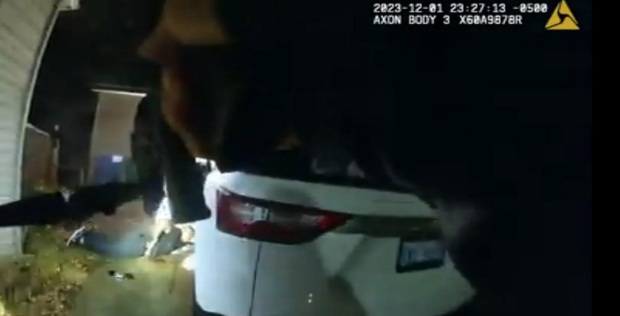
The Sixth Circuit’s recent decision in Romero v. City of Lansing1 is the latest in a string of excessive force cases in the aftermath of the Supreme Court’s ruling in Barnes v. Felix2 earlier this year. At the heart of Romero was whether Lansing police officers acted reasonably when they fired a second round of shots at Stephen Romero after he had already been wounded and lay prone on the ground. The court’s analysis, which reversed the district court’s dismissal of the excessive force claim, illustrates how Barnes has reshaped the qualified immunity framework and the evaluation of police conduct under the Fourth Amendment.
The Facts and Procedural Posture in Romero
In December 2023, Lansing police officers Donovan Moore and Jeff Kurtz responded to a domestic disturbance call involving Stephen Romero. Dispatch reports were conflicting: while Ashly Romero, Stephen’s wife, told 911 that her husband was unarmed, another caller claimed a shooting had occurred. Upon arrival, the officers encountered Stephen outside a vehicle. He complied partially with commands—raising his hands, placing cell phones on the ground, and kneeling—but then lifted his shirt to reveal a holstered gun and seemingly reached toward it. The officers fired, striking him in his torso. While lying on his stomach facing away from the officers, and audibly in pain, Stephen said, “I got you,” and again reached toward his waist. The officers fired a second round, fatally wounding him, and in his last moments, Stephen slid the gun away from him. The entire encounter lasted less than forty seconds and was captured on bodycam footage.3
Ashly Romero sued under 42 U.S.C. § 1983, alleging excessive force, failure to intervene, and municipal liability. The district court dismissed all claims, granting qualified immunity to the officers. On appeal, the Sixth Circuit reversed as to the excessive force claim, relying heavily on Barnes to find that Ashly Romero plausibly alleged a violation of Stephen’s clearly established rights when officers fired the second round of shots.4
The Barnes Ruling and its Aftermath
The Supreme Court’s decision in Barnes back in May 2025 arose from a fatal police shooting during a traffic stop in Texas. Officer Roberto Felix initiated the stop over an unpaid toll, and the encounter escalated when he jumped onto a moving car and fired two shots into the vehicle, killing Ashtian Barnes. The Fifth Circuit upheld qualified immunity under its “moment-of-threat” doctrine, disregarding the initial purpose of the stop and earlier events suggesting that Barnes was cooperative, and instead focusing almost exclusively on the singular moment when Felix fired the shots. The Supreme Court reversed, finding the “moment-of-threat” doctrine to be fundamentally at odds with the requirement for courts to examine “the totality of circumstances” around an officer’s use of force. The Court held that the Fourth Amendment requires courts to assess reasonableness in light of an entire interaction, not a “hermetically sealed” snapshot.5
Barnes recalibrated excessive force analysis nationwide, compelling courts to abandon rigid temporal constraints.6 As explained in more detail below, the Sixth Circuit responded in Hodges v. City of Grand Rapids by interpreting Barnes as partially abrogating (in other words eliminating) the “segmented approach” analysis that the Sixth Circuit had been using for years.7
Applying Barnes: The Totality of Circumstances
The Sixth Circuit’s reasoning in Romero is deeply informed by Barnes and its progeny. While prior cases in the Fifth and Sixth Circuits confined the reasonableness inquiry to the seconds before a fatal shooting, ignoring prior events, such a narrow temporal focus is now far too constrictive. Courts must now consider “all relevant circumstances leading up to the climactic moment.”8
Before Barnes, the Sixth Circuit employed a “segmented approach,” analyzing each discrete use of force in isolation. While Barnes rejected rigid segmentation, the Sixth Circuit in Romero clarified that segmentation is not entirely dead. Rather, courts may still divide incidents into segments for analytical clarity, provided they incorporate the broader context. As the court explained, “even if we divide an incident into distinct segments, we may consider all prior events, including Fourth Amendment violations, in determining whether a particular use of force was reasonable.”9
This nuanced application of Barnes and Hodges allowed the court to focus on the second shooting while considering Stephen Romero’s prior compliance and the officers’ knowledge. The panel concluded that by the time of the second round of shots, Stephen was wounded, lying on his stomach, and largely compliant. His ambiguous gesture—reaching toward his waist—did not, in context, create an immediate threat. Thus, under the totality of circumstances, the second shooting was excessive.10
Pros and Cons of Barnes
While the Supreme Court’s ruling earlier this year has been praised for promoting greater police accountability,11 it has also been correctly noted that the “totality of the circumstances” approach as articulated in Barnes could work in favor of either the officer or the person injured, depending on particular facts at issue.12 Fact-intensive inquiries can cut both ways. Police defendants may invoke the broader context of an encounter to justify their actions, as seen in cases like Feagin v. Mansfield, where the Sixth Circuit Court of Appeals reversed the denial of qualified immunity after considering the plaintiff’s aggressive conduct throughout his interaction with the police officer defendants.13
Conclusion: Navigating the Post-Barnes Era
The state of the law after Barnes reflects a shift toward holistic analysis in excessive force cases. For civil rights activists opposed to qualified immunity, these decisions offer hope, but not certainty. Courts must now weigh the entire timeline of events, which may expose misconduct but also provide officers with additional defenses. Plaintiffs should prepare for fact-intensive litigation, ensuring that their claims capture the full context of an encounter. Attorneys will need to craft narratives that highlight unreasonable conduct across the continuum, not just at the moment of force.
- No. 24-1865, 2025 U.S. App. LEXIS 30087, __ F.4th __ (6th Cir. Nov. 18, 2025). ↩︎
- 605 U.S. 73, 145 S. Ct. 1353 (2025). ↩︎
- Romero, 2025 U.S. App. LEXIS 30087, at *2-3. ↩︎
- Id. at *3-4. ↩︎
- Barnes, 605 U.S. at 80-84. ↩︎
- Id. at 80 (“[T]he “totality of the circumstance” inquiry into a use of force has no time limit.”). ↩︎
- 139 F.4th 495, at 517-18 (6th Cir. 2025). ↩︎
- Barnes, 605 U.S. at 76. ↩︎
- Romero, 2025 U.S. App. LEXIS 30087, at *9 (citing Hodges, 139 F.4th at 518). ↩︎
- Id. at *19-20. ↩︎
- See, e.g., Keeping Cops Accountable: Supreme Court Issues Decision in Barnes v. Felix, by Michael Z. Fox, The Federalist Society (May 21, 2025). ↩︎
- Barnes v. Felix: Discover What It Means and Why It Matters, by John James, James Law Group LLC (Aug. 7, 2025). ↩︎
- 155 F.4th 595 (6th Cir. 2025). ↩︎
 Rights & Remedies
Leave a comment